Category: Large Language Models

  • Lecture: Brains and AI – The Future of Education and Learning

    Lecture: Brains and AI – The Future of Education and Learning

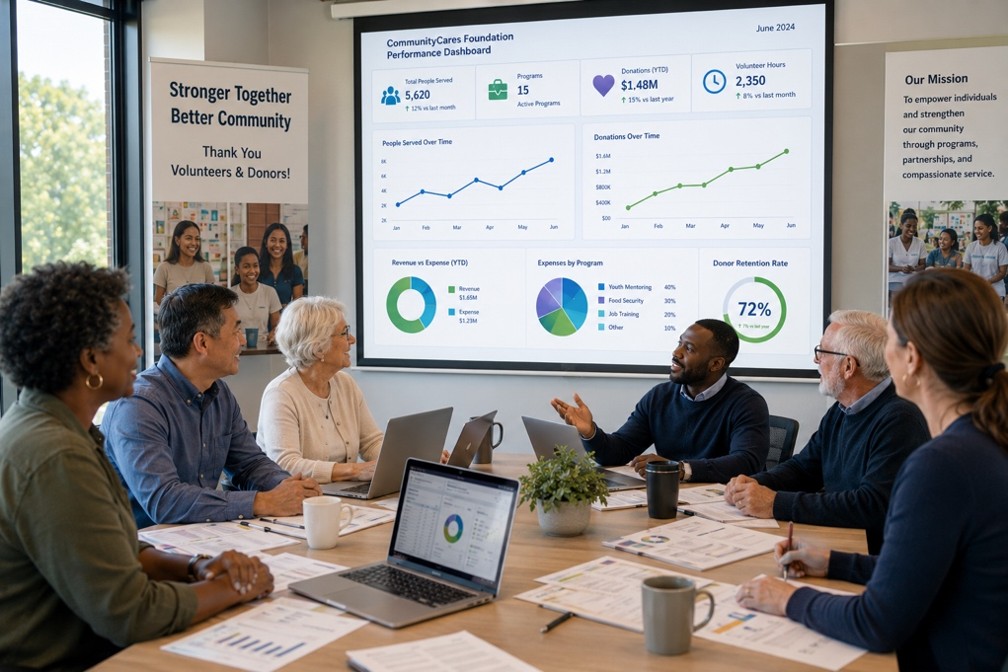
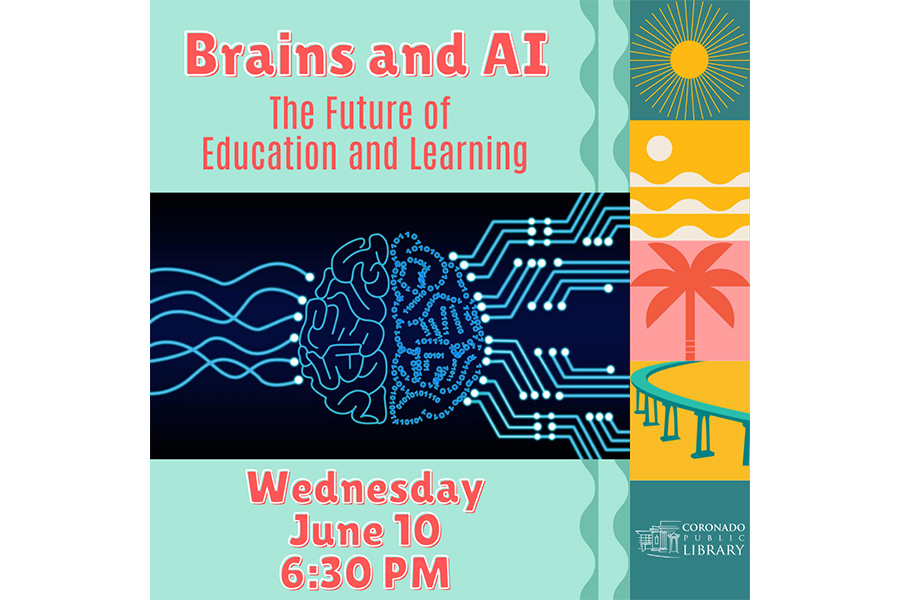
    UCSD Professor Terry Sejnowski will give a lecture , open to the public, at the Winn Room in the Coronado Library on Wednesday, June 10 from 6:30-7:30.

    A number of attendees are from a book club that will have read his book ChatGPT and the Future of AI.

  • Which future careers will be resistant to AI-driven job-losses? Let’s ask Claude

    Which future careers will be resistant to AI-driven job-losses? Let’s ask Claude

    The prospect of a job apocalypse, blighting the career prospects of today’s wave of college graduates, is concerning policy-makers and parents alike. But surely there are some fields that will prove resilient? I wonder what Claude thinks…

    (more…)
  • My Favorite Source of AI Insights and Entertainment: The Hard Fork podcast

    My Favorite Source of AI Insights and Entertainment: The Hard Fork podcast

    The airwaves are full of blogs, podcasts and videos, purporting to cover the latest developments in AI. I regularly tune in to one which is not only insightful but entertaining: The New York Times tech podcast, Hard Fork. It’s now available on YouTube, outside the NYT paywall, and it’s a blast.

    (more…)
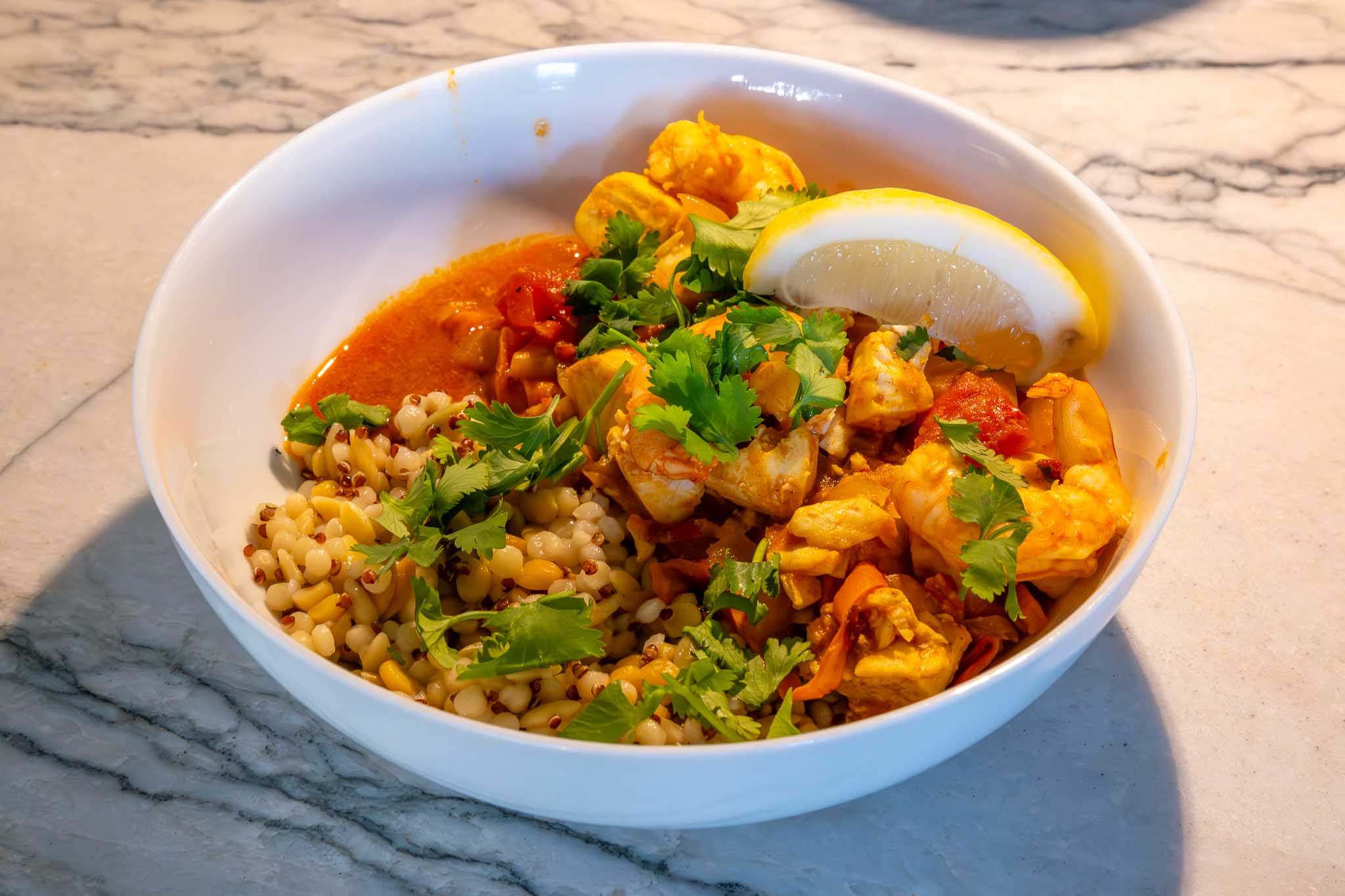
  • Cooking with Claude: Harissa-spiced fish and shrimp tagine

    Cooking with Claude: Harissa-spiced fish and shrimp tagine

    As the saying goes, the proof of the pudding is in the eating. In my case, it was a tagine, staple of Middle-Eastern cooking, rather than a pudding that was being eaten. And the proof in question was whether a Claude-generated recipe actually worked.

    (more…)
  • Vibe Coding with Claude: A personalized recipe generator

    Vibe Coding with Claude: A personalized recipe generator

    Fed up with following the same old recipes? Me too. After stewing on the issue for a while, I decided to put together an appetizing prompt, and have Claude rustle up a personalized recipe generator app for me. In my mind’s eye, I could picture the tasty new dishes I would soon be preparing using my favorite techniques. So, Claude, let’s get cooking…

    (more…)
  • Coding with Gemini: A Personalized News Article Service

    Coding with Gemini: A Personalized News Article Service

    Have you ever wanted your own personal news feed that let you (1) browse a huge, almost real-time stream of news articles from many news sources and (2) selectively view and/or filter articles based upon central topic, keywords, perspective, publication date/time? I have that objective and am utilizing Gemini, Google’s multimodal large language model (LLM) to build such an application.

    (more…)
  • Travel Planning with AI

    Travel Planning with AI

    LLMs (ChatGPT, Gemini, Claude) are reshaping travel planning but have different strengths and integrate in different ways with other travel ecosystem services.  Their surprising power is tempered by the need for careful verification for accuracy.

    (more…)
  • Vibe-coding with Claude: A Lunar Alignment Calculator

    Vibe-coding with Claude: A Lunar Alignment Calculator

    I recently built a Solar Alignment Calculator, with the (considerable) help of Claude. Could “we” pull off a similar trick, a Lunar Alignment Calculator, for predicting the alignment of moonsets with terrestrial landmarks? And, would it take into account all those phases the moon passes through each month?

    This one could be complicated!

    Flushed with the success of my first vibe-coding experience — a personalized app for calculating when the sun would set behind a local point of interest — my thoughts turned to an obvious extension: an analogous app for determining when the moon would set at a specific point on the horizon. 

    Killer shots

    My motivation for producing these apps was so that I could plan ahead for some killer photographs. If I got the timing right, viewed through a telephoto lens these celestial objects would appear as gigantic, luminous orbs, hovering next to a distant point of interest.

    Assuming there were no clouds in the way, that is…

    Damn clouds...
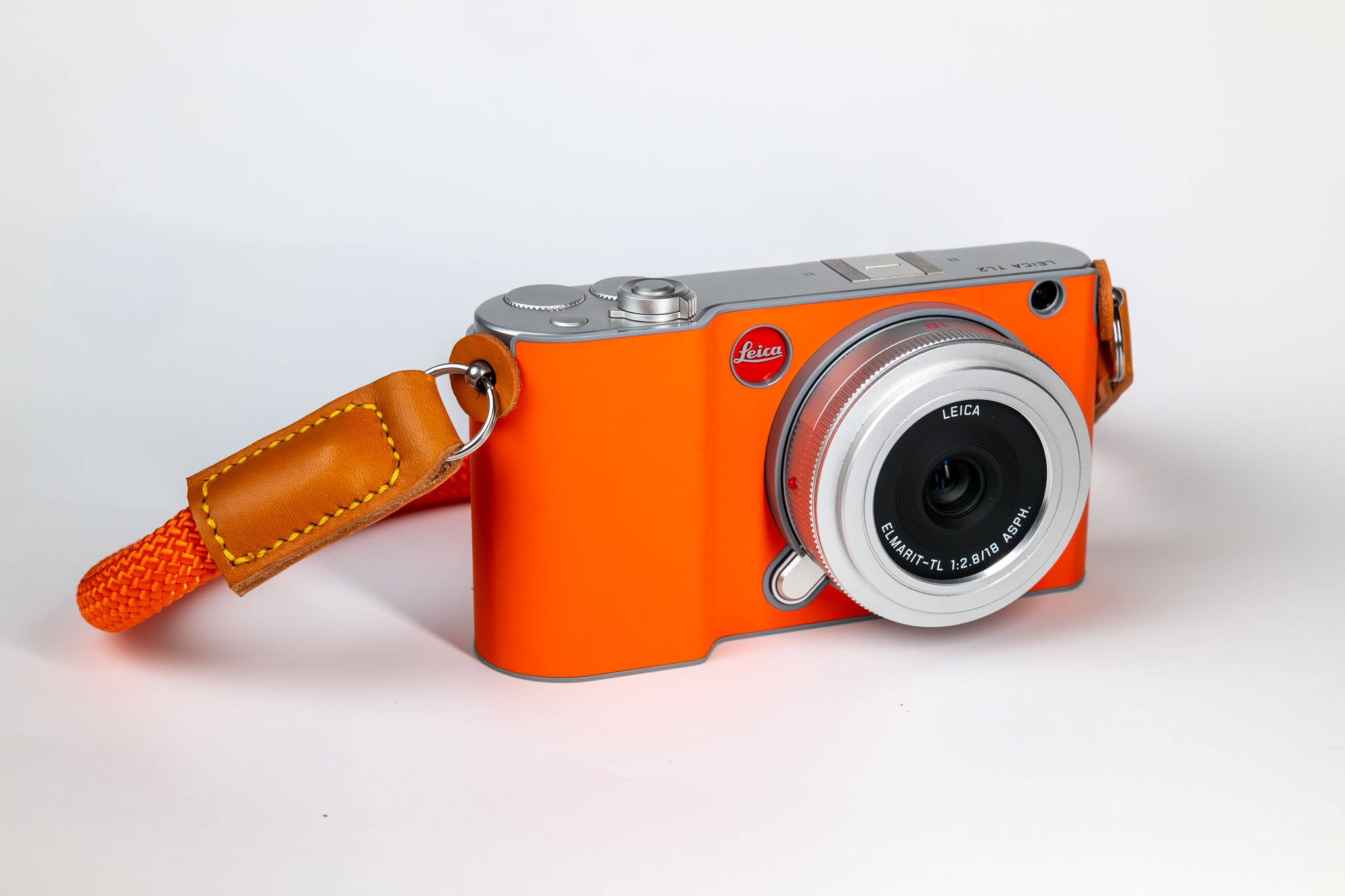
    Damn clouds… Leica TL2 and Sigma 100-400 f/5.6-6.3 600mm f/6.3 1/250s ISO 4000

    Since Claude was already familiar with my thinking on the Solar Alignment Calculator, I composed what I thought was a full description of the app I envisaged. It turned out that it was not as complete as I’d thought.

    Keith’s prompt

    Now that you have built this beautiful solar alignment photography planner, I would like you to build a new, similar tool to find precise dates when the moon rises or sets along my chosen bearing. Please keep the same input fields for point A (where the camera is sited) and point B (the target point on the horizon) as well as year, time zone, and degree of accuracy. For the output, please indicate the date and time that the moon will be at the target point. Also indicate whether the moon is rising or setting.

    Claude’s response

    Read the frontend design skill
    Now let me plan the lunar math carefully before coding. The moon's position requires a more complex algorithm than the sun — I'll use the Jean Meeus (Astronomical Algorithms) approach to compute the moon's azimuth at moonrise and moonset for each day of the year, stepping through the day in fine increments to find the exact crossing moments.
    Created a file, read a file
    Here's your Lunar Alignment Photography Planner — a companion to the solar tool, with the same inputs and workflow but built around the moon's more complex motion.
    Screenshot: Lunar Alignment Calculator
    Screenshot: Lunar Alignment Calculator
    Screenshot: Lunar Alignment Calculator input fields
    Screenshot: Lunar Alignment Calculator input fields
    Screenshot: Lunar Alignment Calculator output data
    Screenshot: Lunar Alignment Calculator output data

    Claude’s overview

    What’s the same?

    what3words address resolution, manual coordinate entry, GPS location, year/timezone/tolerance settings, the bearing line map, and the filtered results table with month tabs.

    What’s new and different:

    The lunar algorithm is substantially more complex than the solar one. Rather than a simple formula, it uses Jean Meeus's full lunar theory (from Astronomical Algorithms) with 60 longitude terms, 30 latitude terms, and atmospheric refraction correction — giving accuracy to within about 0.1°, which is well within photography tolerances.
    The results table has two additional columns compared to the solar planner:
    • Event — clearly labelled ↑ Moonrise or ↓ Moonset, so you know which horizon to point your camera at
    • Moon Phase — shows the phase icon (🌑🌒🌓🌔🌕🌖🌗🌘) and name (e.g. Waxing Gibbous, Full Moon) at the moment of alignment, which is crucial for a photography shoot — a full moon aligning with your target is very different from a new moon doing the same
    A note on computation: the moon's azimuth is calculated by stepping through every day in 2-minute increments and detecting horizon crossings, so the calculation takes a few seconds for a full year — you'll see a "computing" indicator while it works.

    Observations

    • Building on the previous dialog accelerated the creation of this related app
    • Claude therefore generated a fully-functional app in a single step
    • I did not include moon phases in my prompt, but Claude knew these were highly relevant!
    • Claude used both emoji and word-based descriptions of these phases
    • The output of the app conveys more information than the Solar Alignment Calculator, but is still very clear
    • The app does not take into account the change to Daylight Saving Time

    What I learned

    • Keep a copy of the original prompt and subsequent dialog
    • Incorporate all the attributes of your envisaged app in the prompt
    • You can plan a shot down to the minute, but still be thwarted by clouds

    Pursuit of the killer shot continues

    To date, although I am confident that the app correctly predicts the time and date of alignment events, my attempts to photograph a moonset aligned with either of the Point Loma Lighthouses has been thwarted by early morning clouds. Perhaps I will have more success later in the year.

    This is the kind of shot I am after; in this case it’s a merge of two separate photos.

  • Claude Mythos Preview: The world confronts a superhuman machine

    Claude Mythos Preview: The world confronts a superhuman machine

    [Editor’s Note: The following is an example of a post we propose, in future, to keep in a private section of the site, since it is an opinion piece, rather than a description of how an AI tool has been used in practice. We are posting it publicly for a limited time to allow club members to consider whether they support use of a private, subscriber-only, section of the site for articles such as this.]

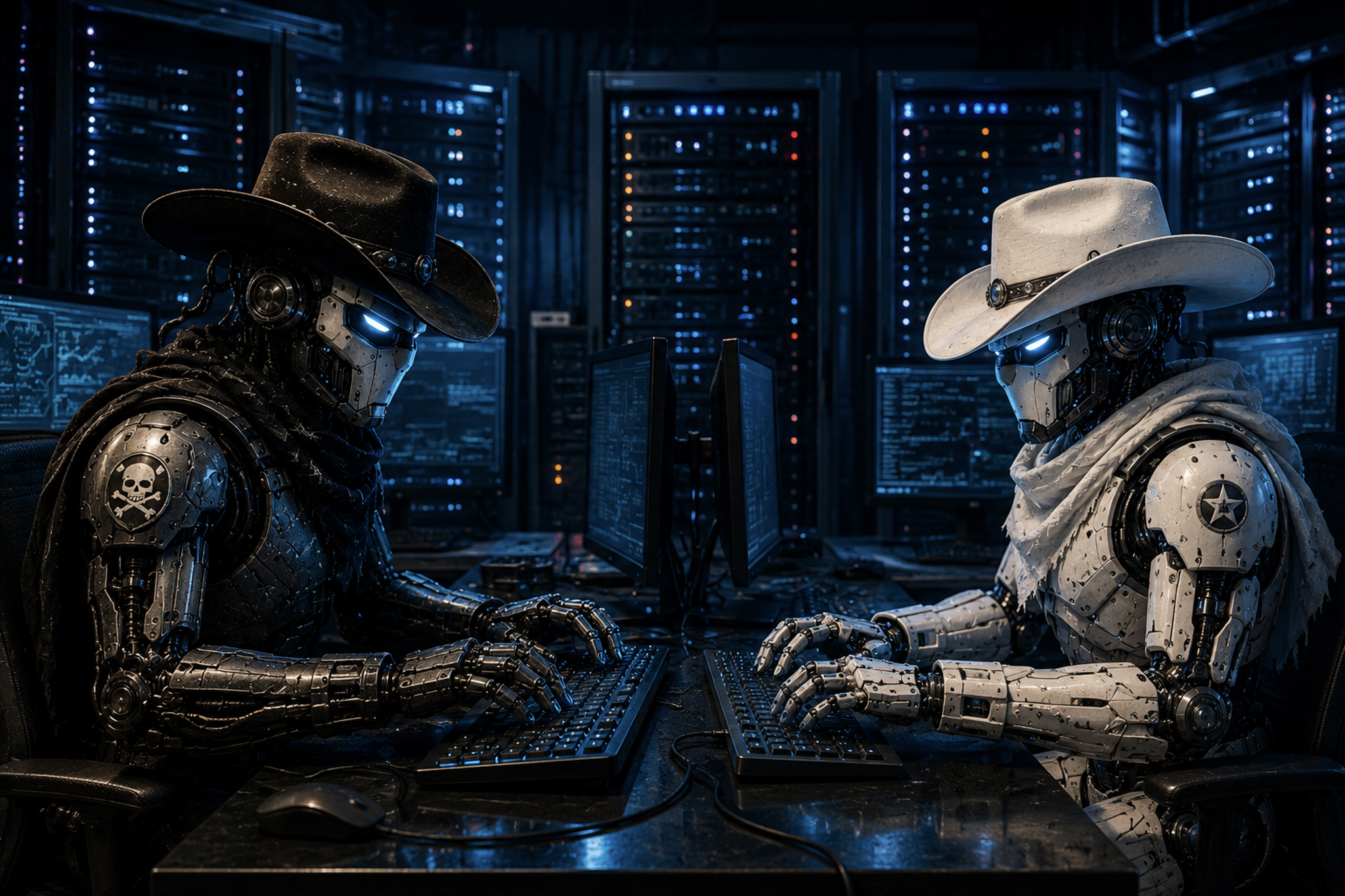
    It may not be faster than a speeding bullet, nor able to jump over tall buildings, but Anthropic’s latest large language model, Claude Mythos, is superhuman in a domain that could pose an existential risk to humans: computer hacking.

    (more…)
  • Vibe coding with Claude: An effective-focal-length calculator

    Vibe coding with Claude: An effective-focal-length calculator

    Modern camera sensors deliver very high resolution images, often 40-60 megapixels, and sometimes even higher. So, digital zooming, that is cropping images to make the subject larger, is increasingly popular. The cropped image usually has plenty of pixels, so is still of high resolution.

    (more…)