
As the saying goes, the proof of the pudding is in the eating. In my case, it was a tagine, staple of Middle-Eastern cooking, rather than a pudding that was being eaten. And the proof in question was whether a Claude-generated recipe actually worked.
In a previous post, I described how I vibe-coded a personalized recipe generator using Claude, the Anthropic LLM. The idea was to expand my modest repertoire of slow-cooked or sheet pan-baked recipes, enabling me to tackle tasty new recipes via these preferred cooking techniques.
I have long been stuck in a rut of slow-cooked Thai or Indian curries. So, in an effort to break free, I asked my recipe-generator app to come up with a slow-cooker shrimp and fish dish based on Middle-Eastern cuisine. I plugged my choices into the app’s user interface, and pasted the resultant prompt into a Claude chat.
In next to no time Claude had conjured up a recipe for a harissa-spiced fish and shrimp tagine. For those unfamiliar with the term, tagines are stews that take their name from a conical cover placed over the cooking pot, ensuring that evaporating water condenses and returns to the pot. For the chemists out there, think of it as an air-cooled Liebig condenser.
I had tested out the app previously with several slow-cooker and sheet pan bake requests. I therefore knew Claude would provide an ingredient list, directions, and cooking notes. The difference this time was that I actually planned to follow the recipe and prepare the dish.
To cut a long story short, I already had most of the required spices, and those I did not, such as harissa paste, I was quickly able to source. I was soon cooking the tagine, following Claude’s recipe to the letter (and gram and milliliter — Claude operates in the metric world).
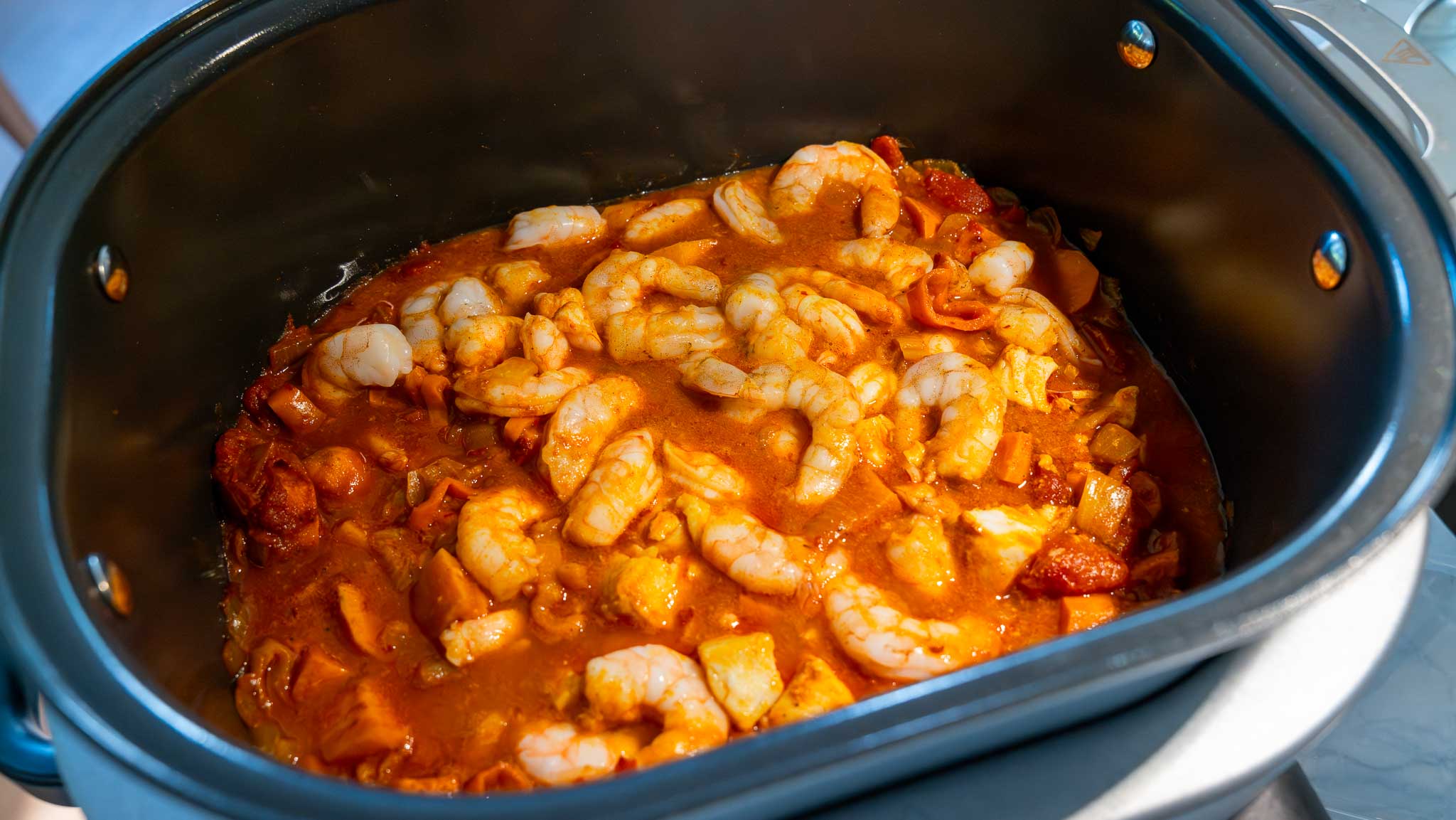
The result? A tasty, and distinctly Middle-Eastern stew, offering a welcome departure from the more familiar curry flavor profile. It was not too spicy, and in fact, would have benefitted from a less mild Harissa and more Cayenne pepper. Perhaps chef Claude was playing it safe until we got to know each other better…
I judge the first, real-world test of my recipe-generator app to have been a success, and a slow-cooker to be a perfect, high-tech alternative to an earthenware tagine. For anyone interested in trying it themselves, the recipe (for four) is below.
You might want to dial up the Scoville-scale rating a bit though…
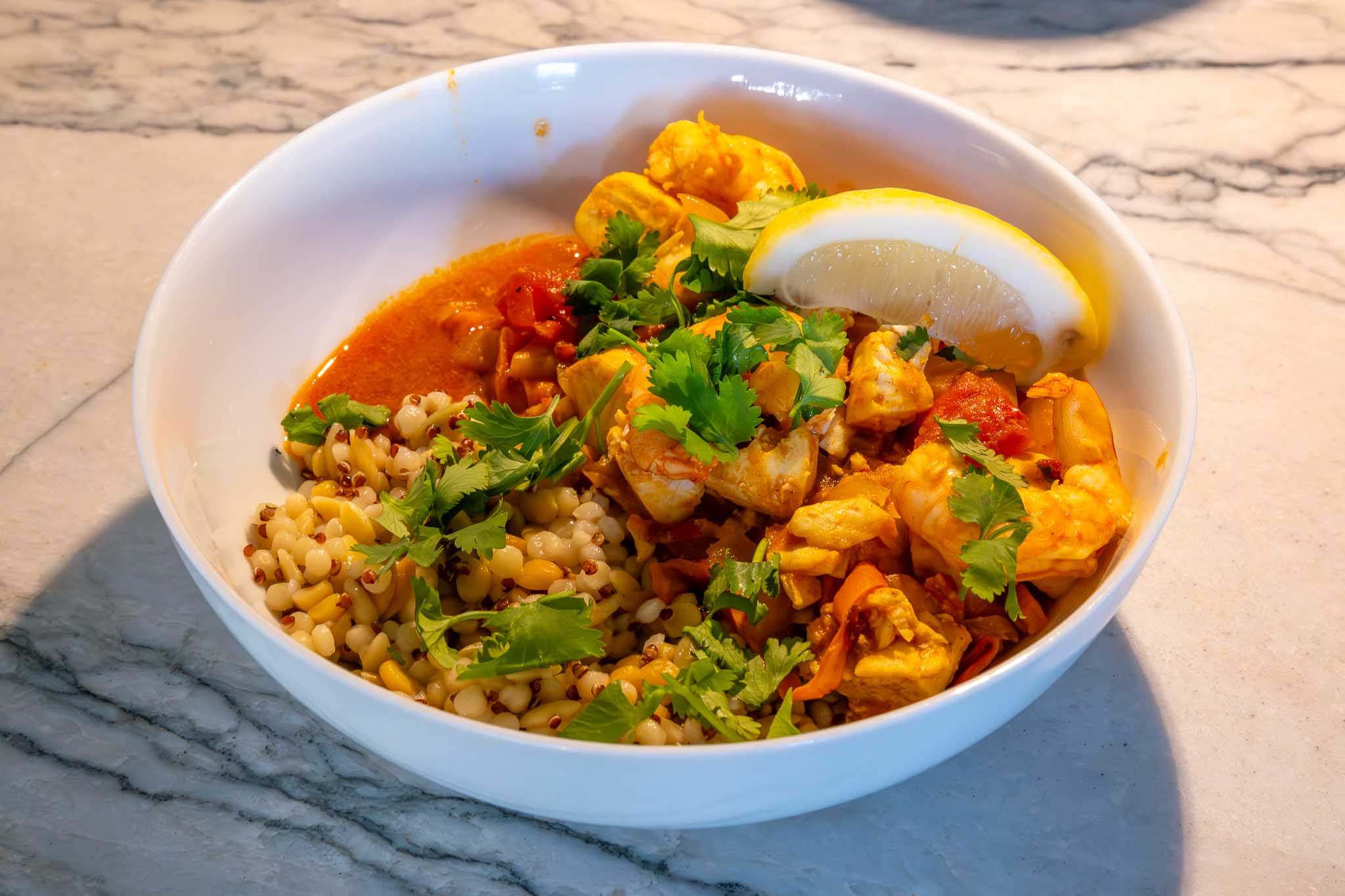
Harissa-Spiced Shrimp and Fish Tagine
Ingredients
- 450 grams cod fillets (or tilapia), cut into 2-inch chunks
- 300 grams large raw shrimp, peeled and deveined
- 350 grams sweet potato, peeled and cut into 1-inch cubes
- 1 red bell pepper, sliced
- 1 yellow bell pepper, sliced
- 1 medium yellow onion, finely diced
- 400 grams canned crushed tomatoes
- 4 garlic cloves, minced
- 2 tablespoons harissa paste
- 1 tablespoons tomato paste
- 2 tablespoons olive oil
- 1.5 teaspoons ground cumin
- 1 teaspoons ground coriander
- 1 teaspoons smoked paprika
- 0.5 teaspoons ground turmeric
- 0.3 teaspoons ground cinnamon
- 0.3 teaspoons cayenne pepper
- 1 teaspoons kosher salt
- 0.5 teaspoons black pepper
- 120 milliliters fish stock (or vegetable broth)
- 2 tablespoons fresh lemon juice
- 0.3 cups fresh cilantro, roughly chopped (to serve)
- 4 lemon wedges (to serve)
Directions
Build the base: Add 1 medium yellow onion, finely diced (onion), 1 red bell pepper, sliced and 1 yellow bell pepper, sliced (bell peppers), and 350 grams sweet potato, peeled and cut into 1-inch cubes (sweet potato) to the slow cooker insert. Drizzle with 2 tablespoons olive oil (olive oil) and toss to coat.
Mix the sauce: In a bowl, whisk together 400 grams canned crushed tomatoes (crushed tomatoes), 2 tablespoons harissa paste (harissa paste), 1 tablespoons tomato paste (tomato paste), 4 garlic cloves, minced (garlic), 120 milliliters fish stock (or vegetable broth) (stock), 1.5 teaspoons ground cumin (cumin), 1 teaspoons ground coriander (coriander), 1 teaspoons smoked paprika (paprika), 0.5 teaspoons ground turmeric (turmeric), 0.3 teaspoons ground cinnamon (cinnamon), 0.3 teaspoons cayenne pepper (cayenne), 1 teaspoons kosher salt (salt), and 0.5 teaspoons black pepper (black pepper) until fully combined.
Slow cook the base: Pour the sauce over the vegetables in the slow cooker. Cover and cook on LOW for 4 hours (or HIGH for 2–2.5 hours), until the sweet potato is fork-tender and the sauce has deepened in color.
Add the fish: Gently nestle 450 grams cod fillets (or tilapia), cut into 2-inch chunks (cod/tilapia chunks) into the stew, submerging them slightly in the sauce. Cover and cook on LOW for 20 minutes — the fish should just begin to flake.
Add the shrimp: Add 300 grams large raw shrimp, peeled and deveined on top of the fish, distributing evenly. Cover and cook on LOW for a final 15 minutes, until the shrimp are pink and opaque and the fish flakes easily with a fork. Do not overcook.
Finish and serve: Drizzle 2 tablespoons fresh lemon juice (lemon juice) over the top and gently stir once. Ladle into bowls over couscous, rice, or flatbread. Garnish generously with 0.3 cups fresh cilantro, roughly chopped (to serve) and serve with 4 lemon wedges.
Notes
Seafood timing is key: Fish and shrimp are added at the end to prevent overcooking — don’t be tempted to add them earlier. Harissa heat: Harissa pastes vary in heat level. Taste your brand and reduce to 1 tbsp for a milder dish. Mushrooms: Omitted here as they can turn waterlogged in a slow cooker; if desired, sauté them separately and stir in at the end. Make it ahead: The vegetable base (steps 1–3) can be cooked a day ahead and refrigerated. Reheat on HIGH, then proceed with the fish and shrimp steps.
Leave a Reply